Protecting Sensitive REE Data
Abstract: This article examines why automated data discovery and masking are becoming essential controls for the rare earth minerals industry and how IRI data discovery and masking software enables companies, joint ventures, and government-aligned operators to protect sensitive information, reduce exposure, and maintain operational advantage without impeding analytics, collaboration, or innovation.
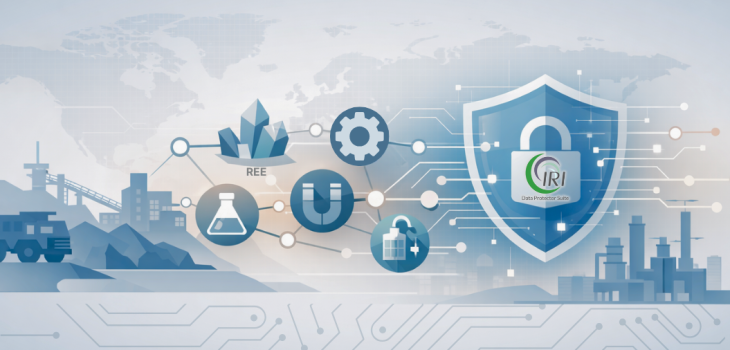
Today, the rare earth elements (REE) industry sits at the intersection of national security, advanced manufacturing, and global supply chain competition. In addition, organizations involved in exploration, extraction, processing, refining, recycling, and downstream manufacturing manage highly sensitive data, ranging from proprietary geological surveys and processing formulas to government-regulated supply chain records and partner agreements.
Why Data Protection Is Mission-Critical in the REE Industry
For example, rare earth elements are foundational to defense systems, renewable energy technologies, electric vehicles, semiconductors, and advanced electronics. Meanwhile, as governments seek to de-risk supply chains and reduce dependence on foreign sources, REE producers and processors face increasing scrutiny from regulators, defense agencies, investors, and strategic partners.
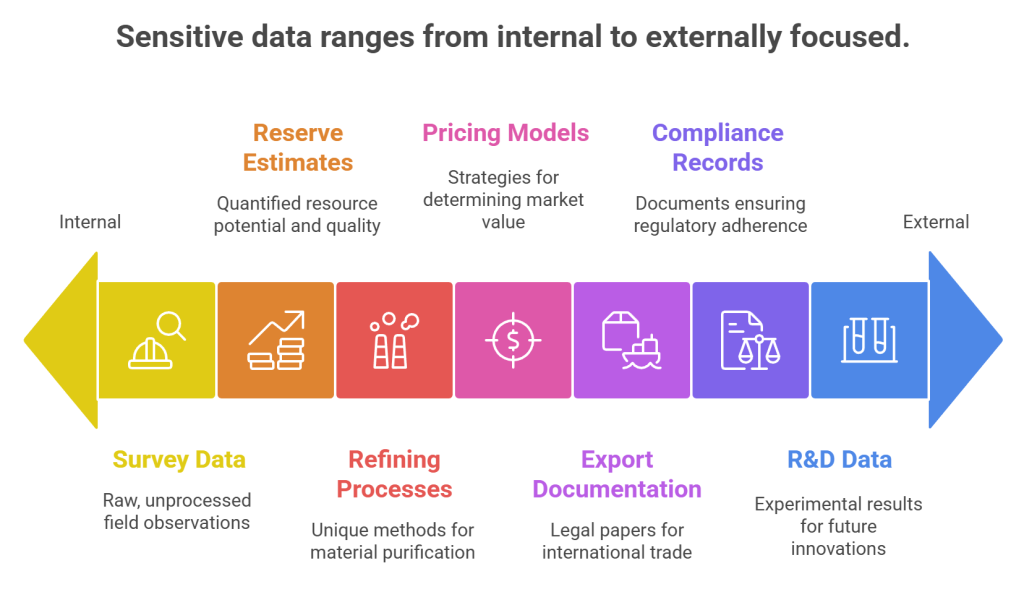
Chiefly, sensitive data in this sector typically includes:
- Geological and geophysical survey data
- Reserve estimates, ore grades, and extraction yields
- Proprietary beneficiation, separation, and refining processes
- Pricing models, offtake agreements, and partner contracts
- Export control–related documentation and country-of-origin data
- Environmental, safety, and compliance records
- R&D data supporting new alloys, magnets, batteries, and recycling techniques
Significantly, exposure of this information through cyber incidents, insider misuse, or uncontrolled data sharing can result in intellectual property loss, regulatory penalties, supply chain disruption, or national security risks.
The Hidden Risk: Uncontrolled Data Proliferation
Similarly, the REE industry increasingly relies on:
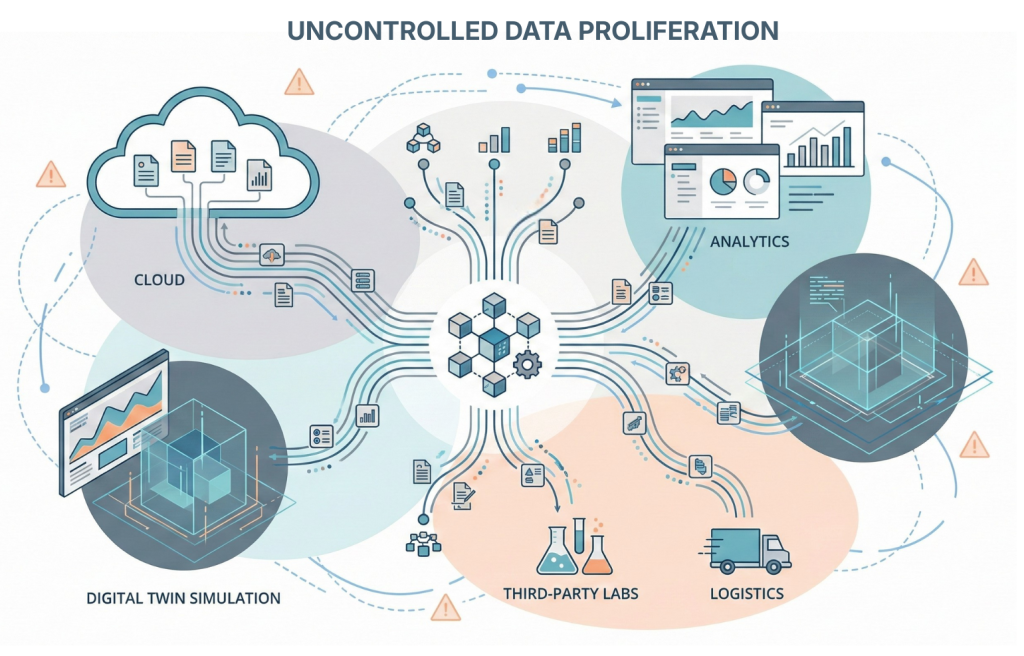
- Data lakes and analytics platforms
- Cloud-based collaboration and document repositories
- Digital twins and simulation environments
- Third-party labs, logistics providers, and research partners
At the same time, as data flows across these environments, sensitive values are often copied into non-production systems, shared externally, or retained longer than necessary. Otherwise, organizations can struggle to enforce least privilege and data minimization principles.
The Role of Data Discovery in Rare Earth Operations
Automated Identification of Sensitive Data
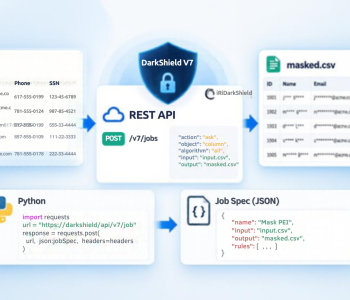
Specifically, IRI DarkShield® performs high-speed discovery and classification of sensitive data across structured, semi-structured, and unstructured sources, including databases, file systems, object stores, and technical documents. In practice, DarkShield uses pattern matching, dictionaries, contextual rules, and NLP techniques to identify:
- Export-controlled identifiers and metadata
- Proprietary chemical compositions and process parameters
- Personally identifiable information (PII) related to employees, contractors, and landowners
- Contractual and partner-sensitive terms embedded in documents
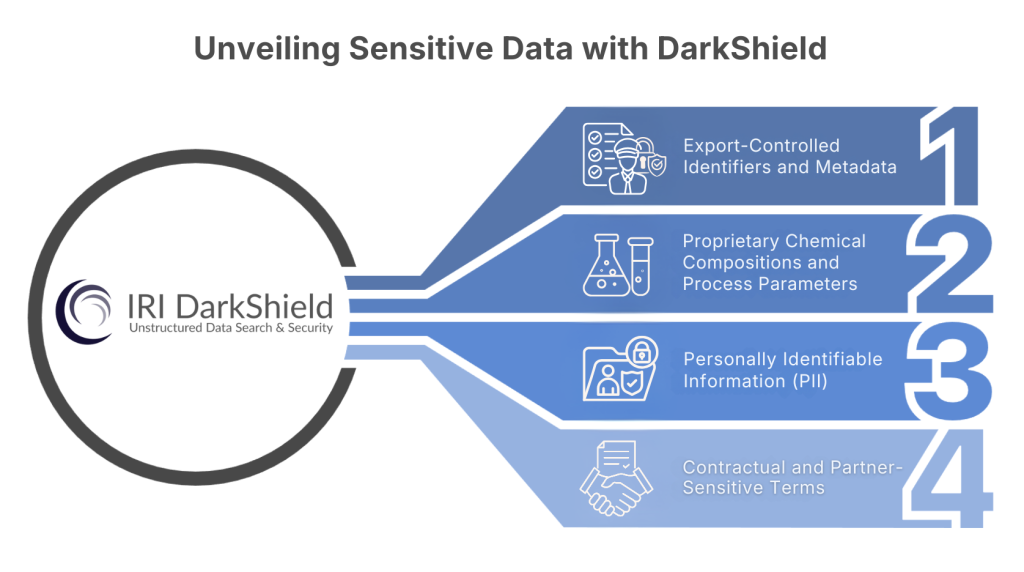
Hence, this capability establishes authoritative data awareness for REE organizations, a prerequisite for both security and compliance.
Why Data Masking Is Essential Beyond Encryption
Although encryption protects data from unauthorized access, it does not address overexposure to authorized users or systems that do not require clear-text values. For this reason, data masking directly addresses this gap.
IRI Masking Capabilities
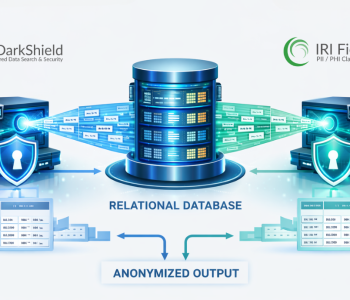
Moreover, tools in the IRI Data Protector Suite, namely IRI FieldShield and IRI DarkShield, support:
- Irreversible masking for high-risk datasets
- Pseudonymization and tokenization for analytics and modeling
- Format-preserving encryption to retain data usability
- Consistent masking across systems to preserve referential integrity
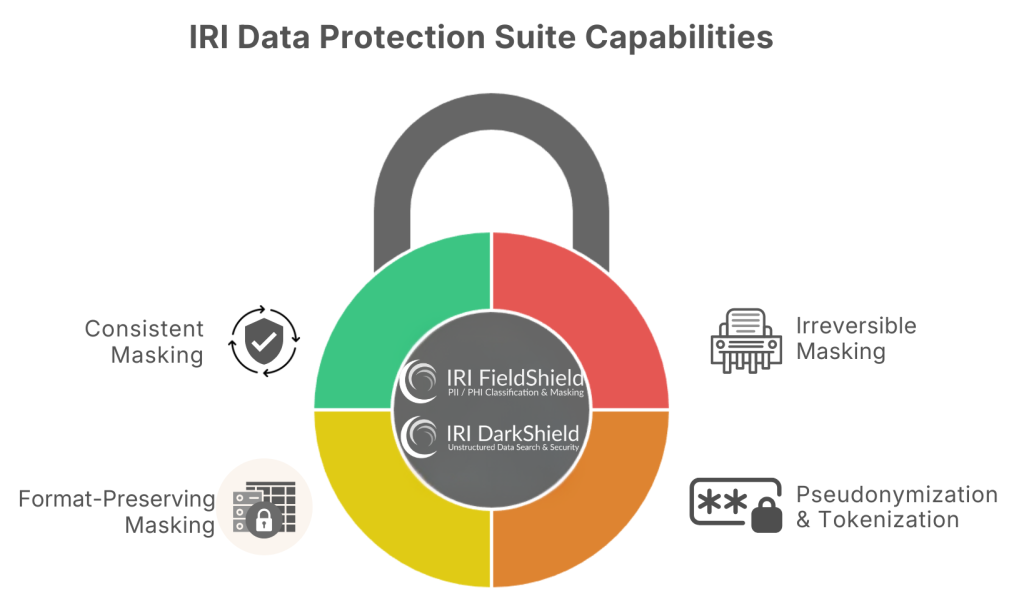
Consequently, masked data can be safely used in analytics, simulation, testing, AI/ML training, and external collaboration without revealing sensitive details.
Mapping REE Data Risks to IRI Capabilities
| REE Data Risk Area | Example Sensitive Data | IRI Capability | Business & Security Benefit |
| Intellectual Property | Processing formulas, yields | Data definition, discovery + masking | Protection of proprietary advantage |
| Supply Chain Sensitivity | Country-of-origin, offtake data | Data classification + obfuscation | Reduced geopolitical exposure |
| Regulatory Compliance | ESG, safety, export records | Policy-driven discovery | Lower audit and penalty risk |
| Workforce & Landowner Data | PII in contracts and surveys | PII detection + masking | Privacy compliance |
| Analytics & R&D | Simulation and test datasets | Format-preserving masking | Safe innovation enablement |
Common Use Cases in the Rare Earth Elements Sector
Among the most common REE data protection use cases are:
- Pre-merger or JV data discovery to understand and protect shared assets
- Safe analytics environments for yield optimization and process modeling
- Redaction and masking of technical documents shared with regulators or partners
- Supply chain transparency initiatives without exposing competitive details
- Secure AI and digital twin development using masked operational data
How Rare Earth Subsegments Benefit from Data Discovery and Masking
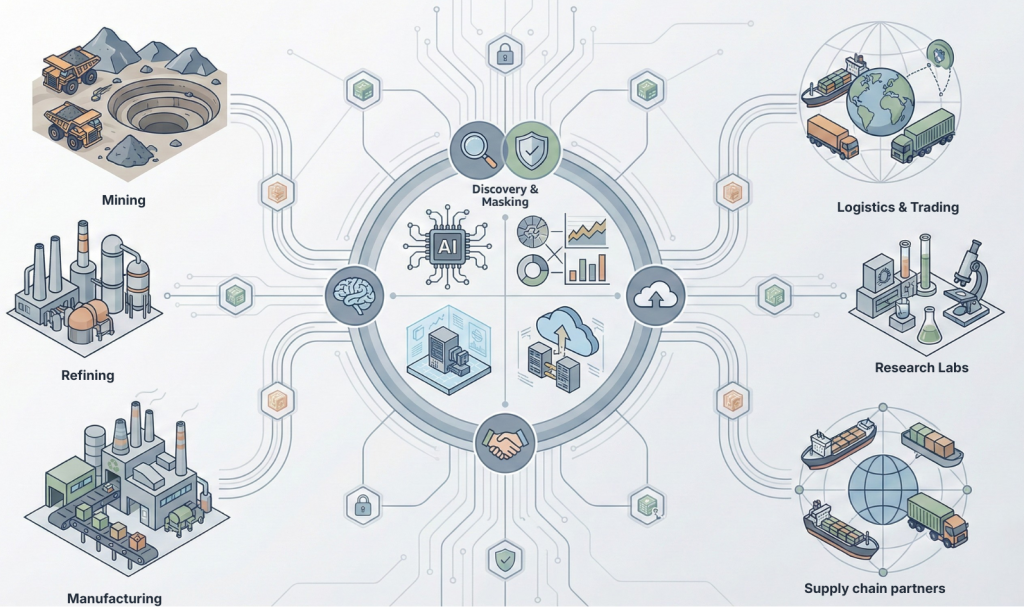
More specifically, different REE subsegments can apply discovery and masking in the following ways:
- Exploration & Mining: Automatically discover and protect geological surveys, reserve estimates, landowner PII, and exploration models while enabling collaborative interpretation and feasibility analysis.
- Processing & Refining: Safeguard proprietary separation techniques, yields, and operational parameters while still supporting process optimization, quality control, and digital twin initiatives.
- Magnet, Battery & Advanced Materials Manufacturing: Mask sensitive formulations, tolerances, and performance data to support testing, analytics, and supplier collaboration without IP leakage.
- Recycling & Circular Economy Operations: Protect recovery processes, supplier inputs, and efficiency metrics while enabling sustainability reporting and regulatory transparency.
- R&D Organizations and National Laboratories: Enable secure data sharing across institutions using masked datasets that preserve scientific validity and repeatability.
- Logistics, Trading & Supply Chain Partners: Reduce exposure of pricing, origin, routing, and offtake details while maintaining traceability and reporting integrity.
- Pre-merger or JV data discovery to understand and protect shared assets.
- Safe analytics environments for yield optimization and process modeling.
- Redaction and masking of technical documents shared with regulators or partners.
- Supply chain transparency initiatives without exposing competitive details
- Secure AI and digital twin development using masked operational data
Benefits for Government-Aligned and Commercial Operators
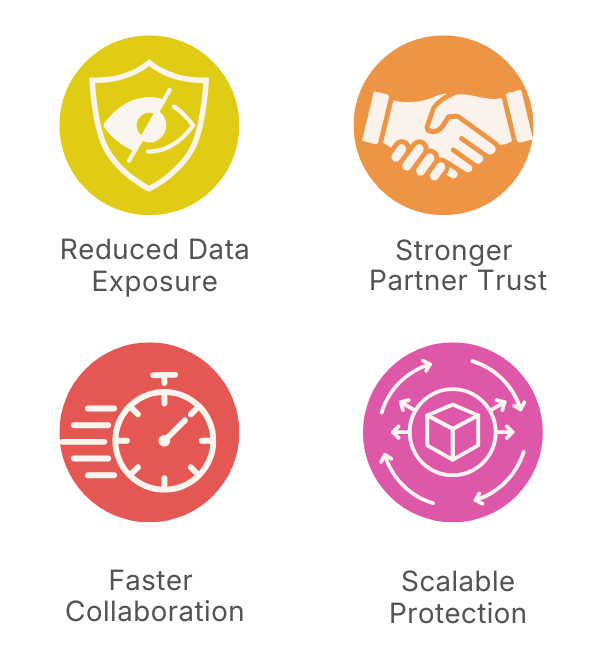
In particular, for organizations supporting defense, energy transition, or strategic mineral initiatives, IRI data masking tools enable:
- Reduced exposure of export-controlled or strategically sensitive data
- Stronger partner trust through demonstrable data controls
- Faster collaboration without lengthy manual redaction cycles
- Scalable protection across legacy systems and modern platforms
Alignment with Export Controls, Data Sovereignty, and National Security
While IRI does not provide legal compliance determinations, its data-centric controls support operational alignment with frameworks and strategic initiatives commonly affecting the rare earth elements industry, including:
- Export Administration Regulations (EAR): Through data classification/discovery and masking to help identify, segment, and restrict access to controlled technical data, process details, and country-of-origin information.
- Defense and dual-use data protections: Persistent (static data) masking reduces unauthorized exposure of materials and process data that are relevant to defense and advanced manufacturing applications.
- Data sovereignty and localization requirements: Policy-driven discovery and masking ensure sensitive datasets are appropriately segmented across jurisdictions and cloud environments.
- U.S. and allied critical minerals strategies: Auditable data controls demonstrate responsible stewardship of strategically sensitive information across domestic and partner supply chains.
- Government funding and oversight programs: Repeatable discovery and protection provide evidence of due diligence, risk reduction, and operational maturity.
Overall, these capabilities enable REE organizations to align their data protection practices with national supply chain resilience and security objectives.
Conclusion
Ultimately, REE data protection is increasingly important because data in the rare earth elements industry can be as strategically valuable as the minerals themselves. Furthermore, IRI data discovery and masking software enables organizations to proactively protect sensitive information, comply with growing regulatory and geopolitical pressures, and collaborate securely across complex ecosystems. Equally important, integrating data-aware protection into daily operations can help REE companies safeguard competitive information while continuing to innovate.
Frequently Asked Questions
Is data discovery really necessary if we know our systems?
Yes, because sensitive data often exists in unexpected locations, formats, and copies.
Does this apply only to large mining companies?
No. In fact, juniors, processors, recyclers, and R&D firms face similar risks.
Can IRI handle technical and scientific documents?
Yes, via IRI DarkShield, including PDFs, Office files, and scanned images.
Does masking affect analytical accuracy?
However, masking does not necessarily affect analytical accuracy because format-preserving and rule-based methods can maintain analytical validity.
Is this relevant for ESG and regulatory reporting?
Yes. At the same time, masking can protect sensitive inputs while supporting transparency.
How does this help protect IP?
By preventing unauthorized access to clear-text proprietary data.
Can discovery rules be customized for chemical or geological terms?
Yes, using extensible dictionaries and pattern libraries.
Is this compatible with cloud platforms?
Yes, across on-prem, cloud, and hybrid environments.
Does masking replace access controls?
No. Instead, masking complements IAM by reducing unnecessary data exposure.
Can masked data be shared with partners safely?
Yes. In this way, masked data can support collaboration without exposing sensitive values.
How does this support insider risk reduction?
By ensuring sensitive values are never broadly visible.
Is discovery a one-time activity?
No. Rather, continuous discovery supports evolving operations as data and environments change.
Can this support M&A due diligence?
Yes, by identifying and protecting sensitive assets early.
Does IRI provide audit-ready reporting?
Yes, with detailed discovery and masking evidence; see this page.
What is the business value beyond security?
Faster innovation, safer data reuse, and preserved competitive advantage.