How to Reduce LLM PII Risk
Large Language Models (LLMs) have transformed how companies process, analyze, and interact with data. However, integrating LLMs into enterprise workflows also introduces significant data privacy and security risks. When sensitive information enters AI training datasets, user prompts, or generated responses, businesses need effective methods to prevent unauthorized disclosure.
The risks grow even higher in industries that follow strict rules. Sensitive information like customer details, health data, or bank records might end up in LLM training systems. Companies must find strong solutions to secure their data while keeping the useful insights that LLMs provide for business tasks.
IRI DarkShield offers a well-rounded approach built to handle these issues. It delivers strong data protection features for the structured, semi-structured, and unstructured data sources that feed AI models.
Understanding Security Issues with LLMs
Large Language Models handle huge amounts of text, which can include regulated data, business secrets, or personal details. Unlike conventional software applications, generative AI systems can produce unpredictable responses, creating additional opportunities for sensitive information to be exposed.
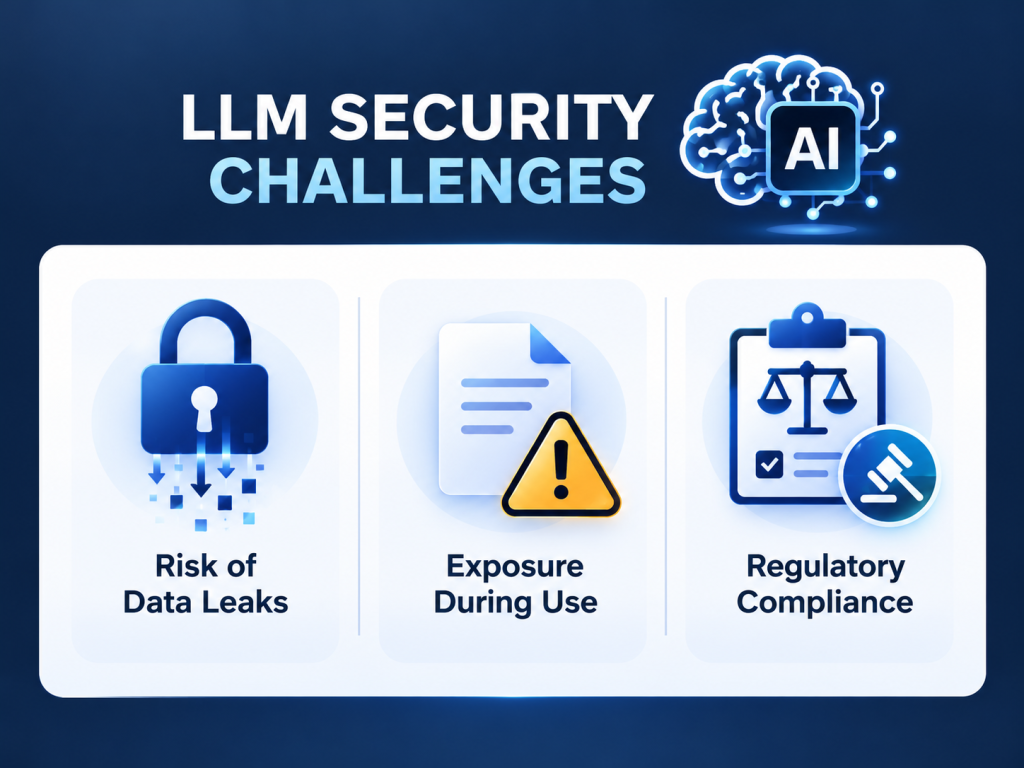
Three important security challenges arise when businesses use LLMs:
- Risk of Data Leaks: LLMs trained on sensitive information may reproduce portions of that data in generated responses. For example, a model trained on customer support conversations could potentially reveal actual customer names or account details when responding to similar prompts.
- Exposure During Use: Sensitive information can enter LLM workflows through user prompts, document uploads, data feeds, or other inputs. Without appropriate safeguards, personal or confidential information may become accessible during AI processing.
- Regulatory Compliance: Businesses in healthcare, financial services, legal services, and other regulated industries must consider requirements such as HIPAA, GDPR, and PCI DSS. These frameworks create obligations for protecting certain types of sensitive information, including data processed by AI systems.
Therefore, reducing LLM PII risk requires identifying and protecting sensitive data throughout the AI workflow, rather than relying exclusively on traditional access controls or application security.
IRI DarkShield: All-in-One AI Data Security
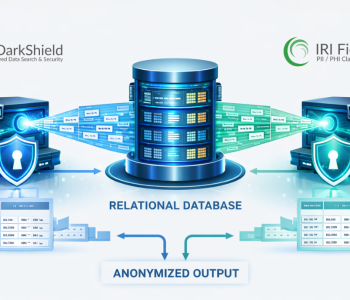
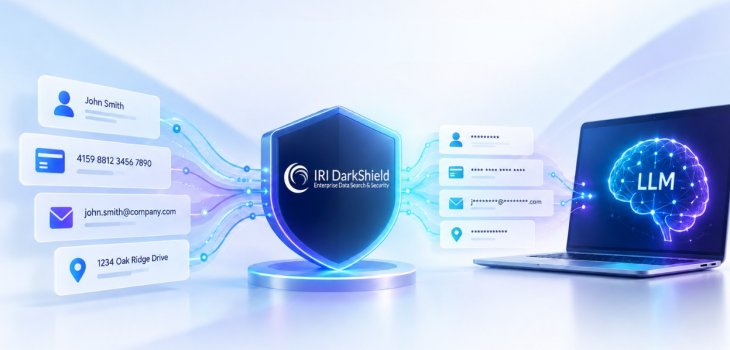
IRI DarkShield data masking tool combines data classification, anonymization and auditing functionality built to work within AI processes. Unlike basic security solutions, DarkShield focuses on the unique needs of machine learning workflows and provides custom-fit protection for LLM setups through GUI, API and CLI deployments.
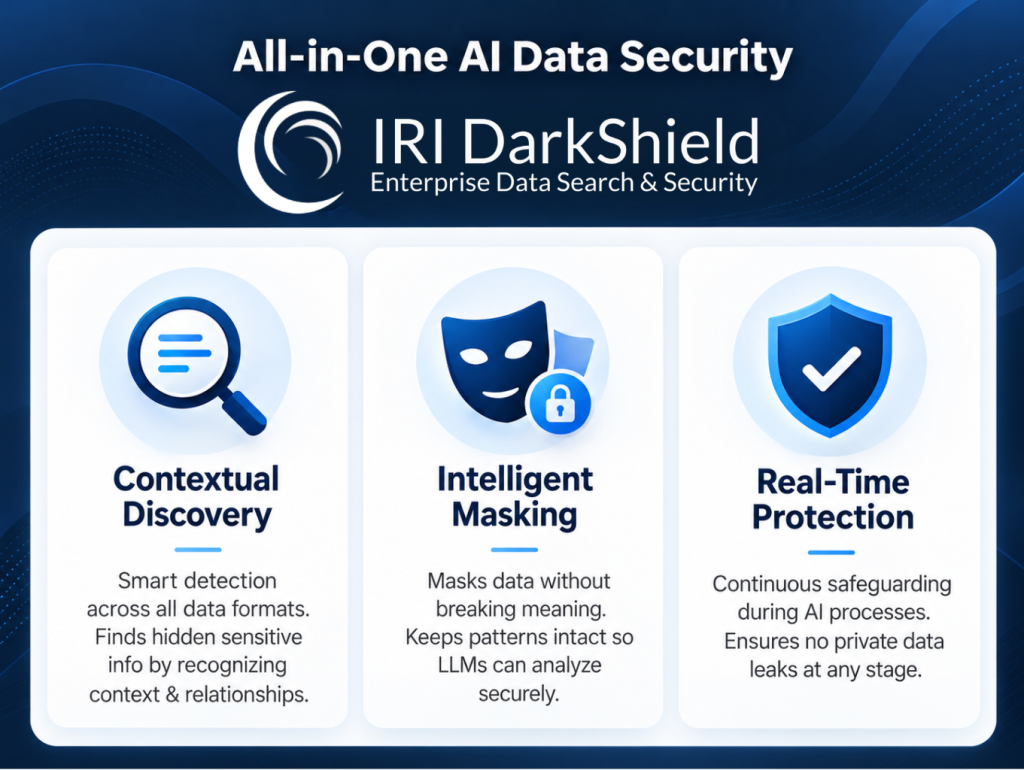
Contextual Data Discovery
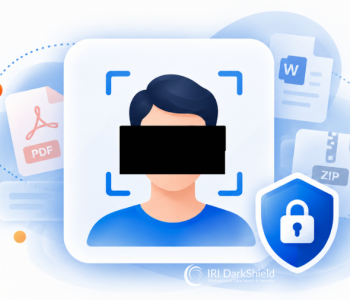
DarkShield uses pattern detection and contextual analysis to identify sensitive information across multiple data formats. These capabilities help locate PII and other confidential values, including information embedded in less structured content.
Identifying sensitive information is an essential first step because data security teams need to understand where protected data exists before applying appropriate masking policies.
Intelligent Data Masking
DarkShield provides advanced masking methods that help conceal sensitive values while preserving useful information within the surrounding data.
For LLM applications, retaining meaningful relationships and readable context can be important. Replacing every sensitive value with generic characters may make some training or analysis data less useful. By applying suitable masking and pseudonymization methods, businesses can reduce exposure of actual sensitive information while retaining relevant data patterns and relationships.
Real-Time Data Protection
DarkShield works to guard data as it moves through LLM processes because its searching and masking services can run in batch or streaming mode and be called through a command task or API.
These integration capabilities allow sensitive data protection to be incorporated into AI processing workflows, including workflows that require ongoing or automated data handling.
AI Security: Layered Defense Strategy
Good AI security needs several layers working together to protect against threats. DarkShield’s discovery and masking capabilities help address sensitive data exposure at multiple stages of the LLM process.
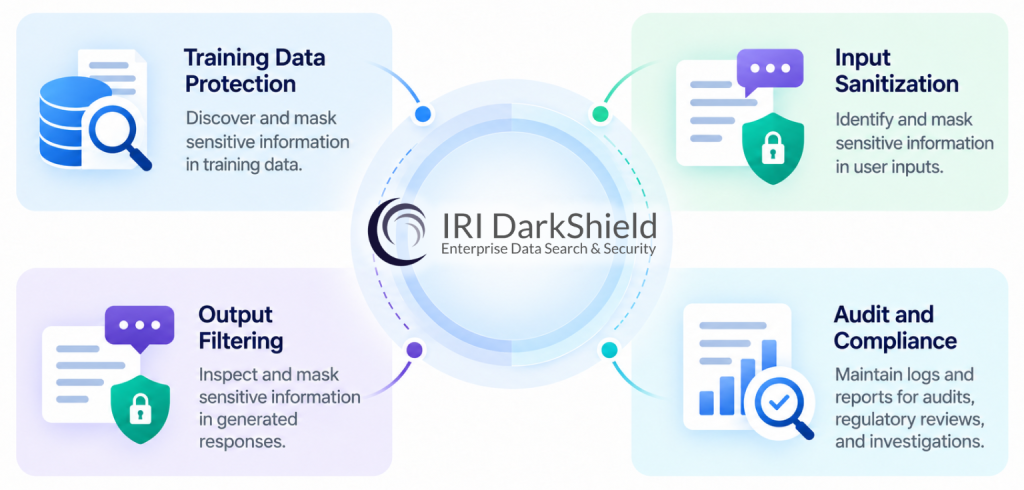
Training Data Protection
Before sensitive information enters an LLM training pipeline, DarkShield can scan the source data to identify and mask protected values. The objective is to reduce exposure of actual sensitive information while retaining useful language patterns, data relationships, and context.
DarkShield can also use AI-based detection technologies, including named entity recognition (NER), handwriting recognition, and database classification models, to help discover sensitive content. These capabilities support the preparation of protected datasets for AI training and other data processing tasks.
Input Sanitization
Sensitive information may appear in chatbot questions, user-submitted documents, or data feeds connected to LLM applications. By integrating DarkShield into the data processing workflow, businesses can identify and mask sensitive information before it reaches the LLM.
For example, masking can be applied to information contained in customer inquiries or uploaded documents, allowing an AI application to process relevant content without necessarily receiving the original sensitive values.
Output Filtering
Generated LLM responses may also contain sensitive information. Consequently, businesses should consider inspecting outputs before they are delivered to end users or downstream applications.
DarkShield’s searching and masking services can be incorporated into output-processing workflows to detect and protect sensitive values in generated content. This provides another layer of data protection alongside input sanitization and training data preparation.
Audit and Compliance
Audit records help businesses document how sensitive data was discovered, processed, and protected. By maintaining logs of relevant data protection operations, IT and compliance teams can support internal audits, regulatory reviews, and investigations into how sensitive information was handled during AI processing.
Together, these layers help businesses develop a more comprehensive approach to reducing LLM PII exposure.
Generative AI Tokenization: Effective Safeguards
Traditional data tokenization or masking methods may not always preserve the linguistic context required for generative AI applications. For example, replacing a person’s name or account information with meaningless characters can interrupt sentence structure or remove relationships that are useful for text analysis.
DarkShield supports masking and pseudonymization methods, including deterministic transformations and format-preserving encryption, that can help retain selected data relationships while protecting the original values.
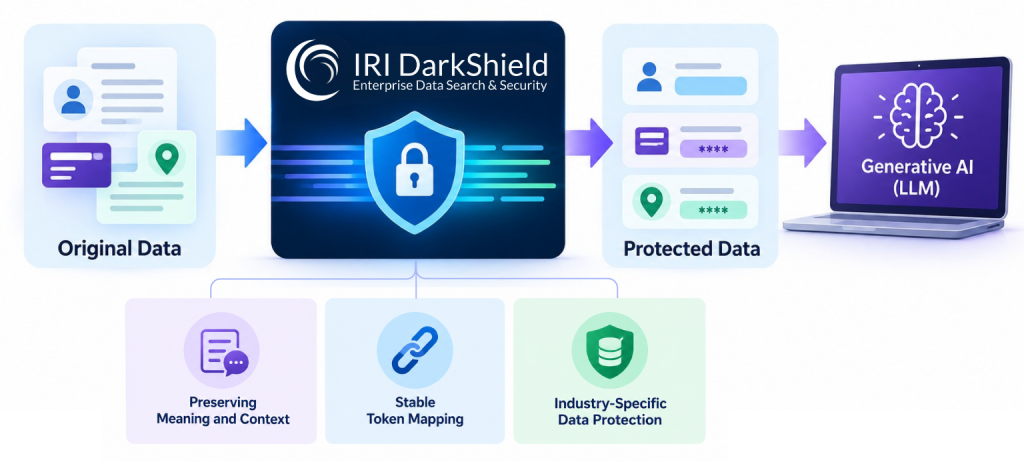
Preserving Meaning and Context
When businesses apply masking rules consistently, they can maintain meaningful relationships within protected datasets.
Consider a customer complaint involving a billing issue. Sensitive information, such as a customer name or account number, can be replaced while the surrounding explanation of the billing problem remains available for analysis. This allows an LLM application to work with relevant information without requiring direct access to the original protected values.
Stable Token Mapping
The system ensures that tokens remain consistent across datasets and over time. When the same sensitive information appears in different locations, it receives the same token or ciphertext. This consistency is essential for preserving the data relationships that large language models rely on.
Industry-Specific Data Protection
Different industries work with different categories of regulated and confidential information. Therefore, masking policies should reflect the type of data being processed and the applicable privacy or security requirements.
DarkShield provides configurable data protection methods based on data type, legal requirements, and the specific needs of AI applications.
Integrating DarkShield into Existing LLM Workflows
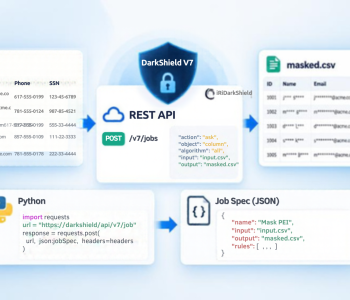
Businesses can incorporate DarkShield into data processing environments using its REST API and other supported deployment interfaces. Rather than replacing the existing AI application, DarkShield can function as a discovery and masking component within the data flow between storage systems, data processing services, and LLM applications.
Connection Framework and API Integration
DarkShield’s API-based integration allows applications to invoke sensitive data discovery and masking operations programmatically. These capabilities can support workflows in which data must be protected before moving from a source system into an AI training or inference environment.
For example, a company may use a DarkShield processing step to identify and mask sensitive values in source documents before those documents are submitted to an LLM. The same general approach can support output inspection when generated content is routed through a separate processing step.
LLM Data Protection Use Cases Across Industries
DarkShield’s discovery and masking methods can support AI initiatives across several industries.
- Healthcare AI: Hospitals and healthcare providers using LLMs for document processing or clinical support must consider the protection of patient information and applicable HIPAA requirements.
- Financial Services: Banks and financial institutions using LLMs for fraud analysis or customer support need to protect financial records, customer identifiers, and applicable payment card information.
-
Legal Technology: Law firms using AI to review or analyze documents must protect confidential client information and consider attorney-client confidentiality requirements.
-
Customer Service: Companies deploying LLM-powered chatbots can use sensitive data discovery and masking to help reduce the exposure of customer information during automated interactions.
Configuration Management
DarkShield provides configurable policies for identifying and protecting different categories of sensitive information. Depending on the data and application requirements, businesses can use techniques such as pseudonymization, inserting fake but realistic data, and format-preserving encryption.
These options allow data security teams to select transformations that align with their data protection objectives while retaining the information needed for permitted downstream processing.
Monitoring and Performance
Monitoring data protection operations is important when sensitive information moves through enterprise AI workflows. IT and security teams need visibility into processing activity, potential issues, and operational performance to evaluate whether established protection procedures are functioning as intended.
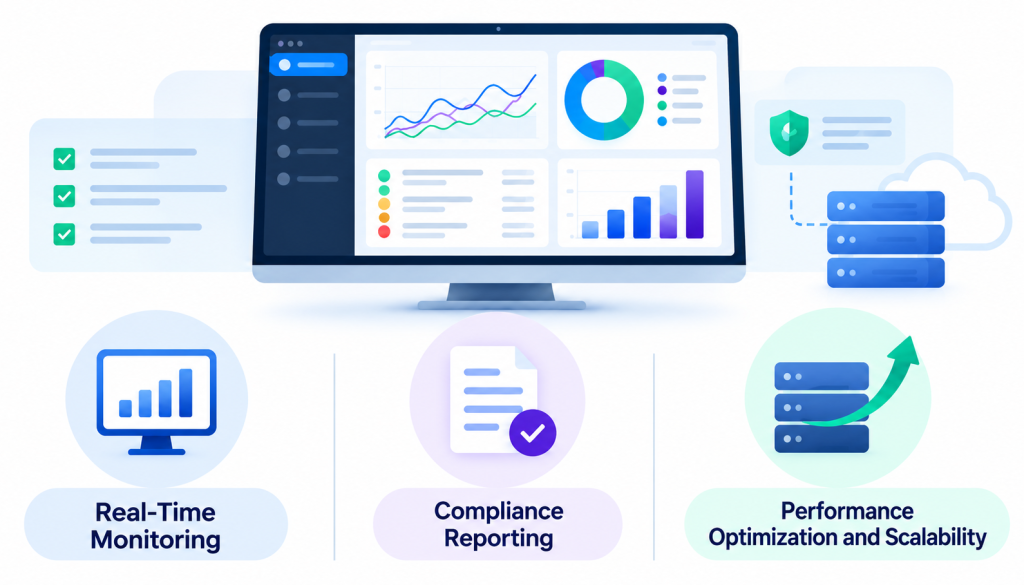
Real-Time Monitoring
Users can view data protection tasks, processing loads, and security events through detailed dashboards.
Real-time monitoring can help administrators review processing activity and investigate operational issues or potential data protection concerns.
Compliance Reporting
Audit records and reporting mechanisms can provide evidence of data protection operations for internal reviews, compliance assessments, and security investigations. These records can help businesses understand which operations were performed and support documentation of their sensitive data handling procedures. For more details on logging and reporting, see the IRI DarkShield Audit Logs documentation.
Performance Optimization and Scalability
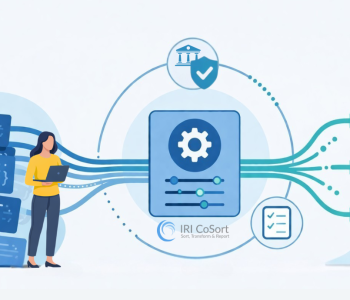
DarkShield’s design supports the heavy data processing required in enterprise AI solutions. It scales linearly with data volume on individual nodes and supports load balancing across multiple nodes to reduce strain on critical systems. As data volumes grow, horizontal scaling helps manage increasing workloads efficiently.
Reducing LLM PII Risk with IRI DarkShield
Protecting sensitive information in LLM workflows requires businesses to address privacy risks during data preparation, application input processing, output handling, and compliance monitoring.
IRI DarkShield supports this approach through sensitive data discovery, classification, masking, configurable transformations, API integration, and auditing capabilities. By incorporating these functions into AI data pipelines, businesses can reduce the exposure of actual sensitive information while preserving the data relationships and context needed for legitimate AI applications.
To learn more about protecting sensitive data in LLM workflows, contact darkshield@iri.com or try IRI DarkShield free for 30 days.
Frequently Asked Questions
How is data masking for LLM different from traditional data masking?
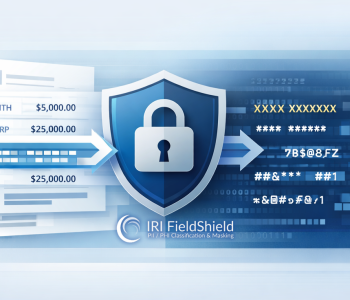
LLM data masking often needs to preserve language structure, contextual meaning, and useful relationships within the source data. Traditional masking may replace sensitive values with fixed characters such as “XXXXX,” potentially reducing the usefulness of text for language analysis. DarkShield supports alternative masking and pseudonymization methods that can help retain useful context while protecting actual sensitive values.
What LLM security risks can DarkShield help address?
DarkShield can help reduce sensitive data exposure in AI training datasets, LLM inputs, and generated outputs. Its discovery and masking services can be incorporated into processing workflows to identify and protect PII and other confidential information. These capabilities complement other AI security controls rather than replacing them.
How can generative AI tokenization protect privacy while keeping data useful?
Generative AI tokenization relies on complex mapping methods to preserve semantic relationships while protecting sensitive information. Rather than assigning tokens randomly, DarkShield can use named entity recognition (NER) models to analyze context and meaning, helping apply pseudonyms (tokens) that reflect linguistic patterns important for AI training.
For example, names with similar characteristics receive similar tokens. This helps preserve gender and cultural patterns while protecting personal identities. The system also maintains token consistency across different datasets and over time, preserving referential accuracy. As a result, LLMs can learn natural language patterns without requiring direct access to the original sensitive information.
Can DarkShield work with existing LLM setups without major changes?
DarkShield integrates with existing AI systems through its API-first design and flexible deployment options. It can function as a preprocessing layer, a real-time filter, or a component within an existing data pipeline. You can deploy DarkShield in cloud, on-premises, or hybrid environments, typically requiring only minor configuration changes.
DarkShield is designed to protect sensitive data without significantly affecting processing performance. Its APIs support integration with AI tools, data management systems, and security platforms while minimizing disruption to existing system architectures.
Can DarkShield protect both LLM inputs and outputs?
Yes. DarkShield’s discovery and masking services can be integrated into LLM workflows to filter sensitive data before processing and inspect generated outputs for potential exposure of private or confidential information. This supports data protection on both sides of the AI workflow.
How does DarkShield protect LLM training data?
DarkShield can scan and mask sensitive information before data enters a training pipeline. Deterministic masking, pseudonymization, and format-preserving encryption can help preserve useful patterns while reducing the risk of exposing real PII.
Can DarkShield support real-time LLM data protection?
Yes. DarkShield can run search and masking services in batch or streaming mode and can be called through APIs or command tasks. These capabilities allow businesses to integrate sensitive data protection into real-time AI workflows.
Does DarkShield provide audit and compliance reporting for AI workflows?
Yes. DarkShield records sensitive data discovery and masking operations in detailed logs that can support compliance reporting, internal audits, and security reviews. These records help businesses document how sensitive information was identified and protected during AI data processing.