

Using the IRI Workbench GUI for FieldShield, you can also define and apply deterministic data masking rules across one or more data sources at a time. This protects columns in multiple tables (or files) with similar content in a consistent way and thus preserves referential integrity.
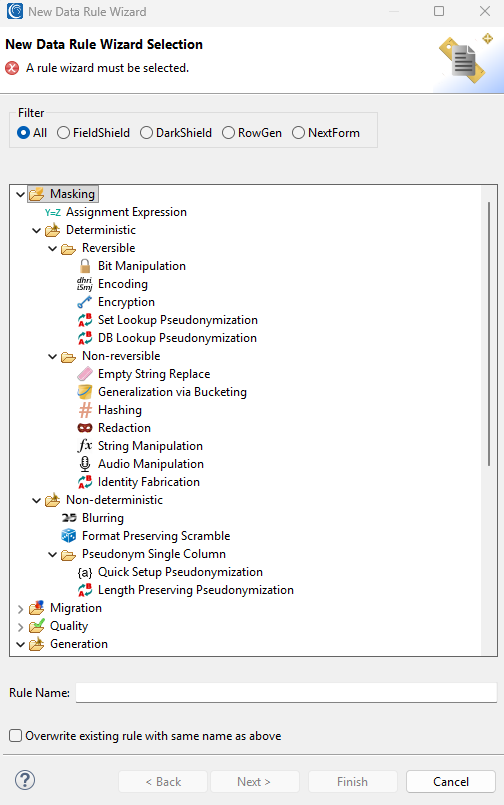
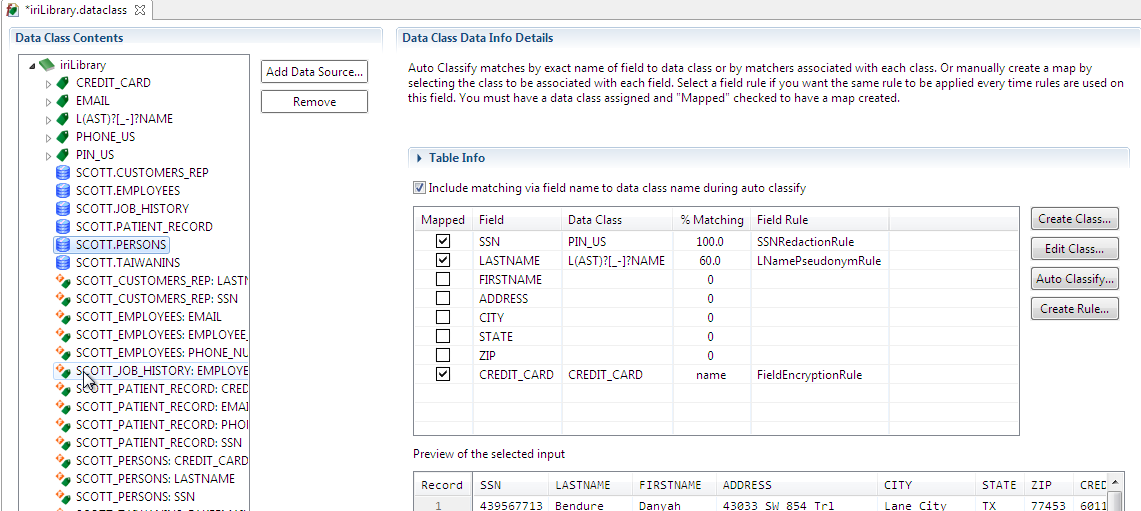
Say you want to apply format-preserving encryption to all the columns in a database with a social security number (which may be a key). If those column names can be pattern-matched by an expression, for example, the defined rule will apply.
The protection rule can be specified, stored, and re-used in a data class or project rule library. Cross-table (or multi-file) rule application avoids the need to specify protections repeatedly, achieves consistency in appearance, and preserves the links between tables; i.e., your joins will still work after the masking is done. Restoration (e.g., decryption) can be performed globally if needed, too.
See this article on the Data Class and Rule Library in IRI Workbench for more information, and see this article on masking data in a relational database for a big picture look at how FieldShield data classification, search, and masking operations work to preserve referential integrity through the application of deterministic data masking rules like format-preserving encryption to defined and discovered data classes.
Data class masking rules can be also applied automatically to multiple flat files in SMB directories. See this article.