

Faster Data Mastering Solutions
Voracity is the only affordable, high-performance, all-in-one on-premise data management platform. Control your data in every stage of the lifecycle, and extract maximum value from it.
Learn More
Try It Free for 30 Days
See how Voracity performs on your own data - no cost or sales call required to start.
Start Free TrialWhere Big Data, DW/BI, and Governance Converge
Profile and classify enterprise data sources. Speed or leave legacy DBs and ETL tools. Cleanse and blend data for analytics and AI. Find and mask PII. Create and manage test data. Simplify, scale, and save on big data projects. Do it all with Voracity!
Learn MoreMultiple Sources, Functions, Engines, and Design Options
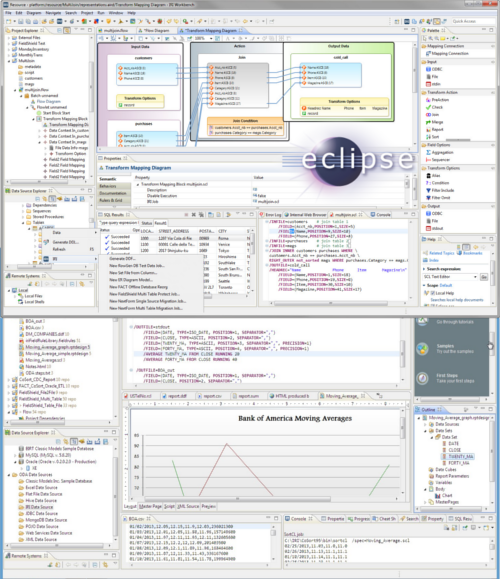
Voracity combines data discovery, integration, migration, governance, and analytics in a managed metadata framework built on Eclipse™. Leverage multithreading, load balancing, task consolidation via CoSort, and AI-enabled data discovery in semi- and unstructured sources.
Learn More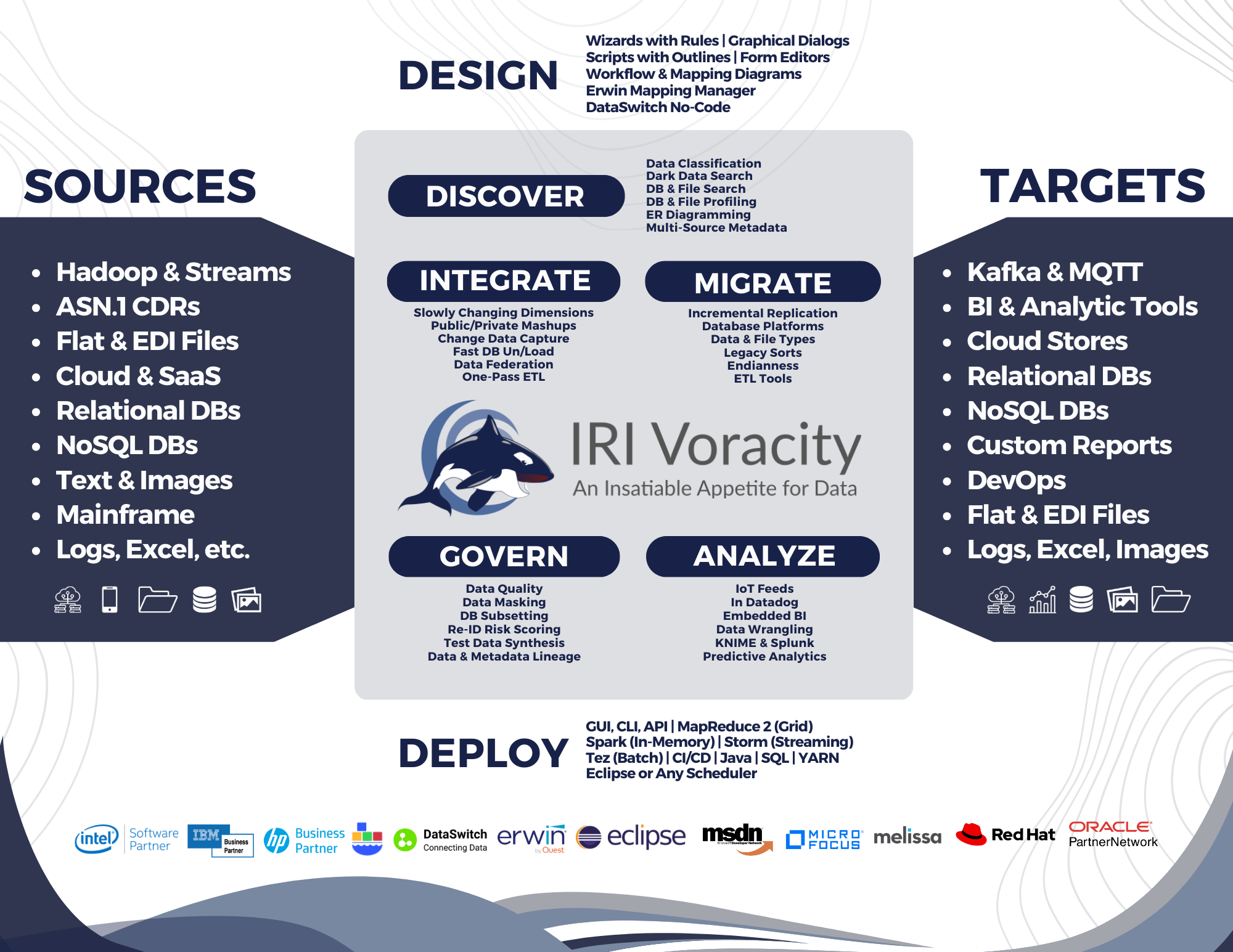
Voracity Use Cases
Big Data Analytics

Wrangle and prepare data for AI models and BI tools, support textual ETL and CDR DWs, analyze click and IoT streams, and speed time to insight.
Learn MoreETL Modernization

Combine and optimize data transformations with CoSort or Hadoop engines. Speed legacy ETL tools, or leave them by converting their mappings over time.
Learn MoreData Governance

Find, classify, mask, and risk-score PII to comply with privacy laws. Capture changes, improve quality, track lineage, and manage metadata.
Learn MoreTest Data Management

Synthesize and load referentially correct test schema. Preview ETL mappings and virtualize realistic test files and reports.
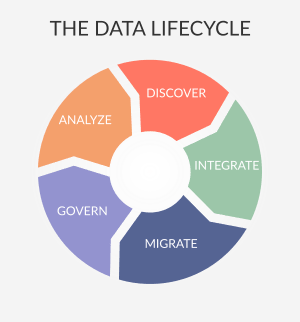
Learn MoreCentral Control of Data
Discover
Integrate
- Greenfield ETL
- Speed Legacy ETL
- Convert ETL Jobs
- Single I/O
- Wrangle & Report
- SCD, CDC & DQ
- CoSort or Hadoop
Migrate
Govern
- Mask PII/PHI
- Cleanse & Enrich
- Unify Data
- Audit Changes
- Manage Metadata
- Subset Databases
- Create Test Data
Analyze
- Display in Splunk™
- Boost© & C Stats
- Segment & Predict
- Capture Changes
- Spot Trends
- Flow into KNIME
- Report or Wrangle
Curate
- Profile & Acquire
- Cleanse & Unify
- Protect & Audit
- Process & Provide
- Express & Predict
- Convert & Copy
- Publish & Share
Featured Insights & Resources


Voracity User Profiles
- CDOs who need an accessible, standard foundation for digital business
- CFOs who want a viable alternative to ETL megavendors and multiple tools
- CIOs who see the inefficiency of in-DB transforms and legacy ETL steps
- CISOs who want PII and other sensitive data found, masked, and audited
- DBAs who want to accelerate, migrate, and prototype VLDBs, EDWs, and apps
- Architects who want a simpler way to design and run big data jobs
- Data Scientists who need to locate, clean, and analyze disparate data faster
- AI Engineers who need clean, anonymized data to feed LLM models
- Developers who need to build, speed, test, and benchmark solutions
